Play sessions · children 3–12 · in Russian · Haarlem
Children don’t always have the words. They always have play.
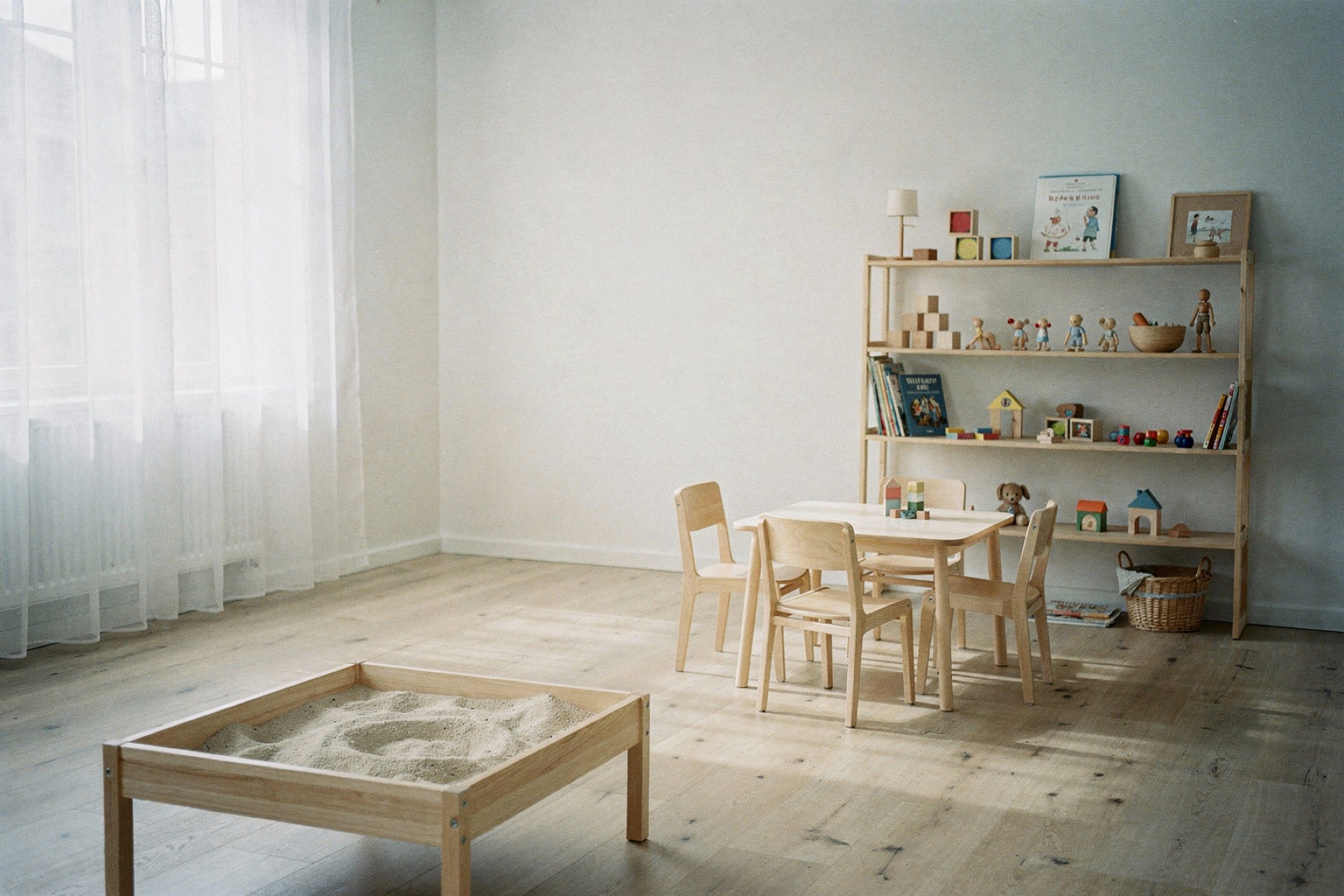
My name is Daria, and I’m a child play specialist. Once a week, in a bright room in Haarlem, I meet children who are going through a difficult stretch — and we play. It isn’t a lesson and it isn’t a doctor’s visit: it is forty-five minutes that belong entirely to the child.
01What this is
A room where everything important is allowed
When life gets heavy, adults go and talk — to a friend, to a therapist, to themselves on a long walk. A child can’t do that yet: there are no words in them for jealousy, fear, or homesickness for a flat they’ll never see again. What a child has instead is play. In play, children show what they cannot say — and by showing it, they slowly come to terms with it.
My work is to give that a place. A child comes to my playroom, where sand, paints, dolls and dress-up costumes are waiting — and an adult who doesn’t grade, doesn’t hurry, and doesn’t turn play into a lesson. Here, the child leads. The method I work in is called child-centered play therapy; how it works is a little further down this page.
Sessions are held in Russian. Families come to me from Haarlem, Amsterdam and all over North Holland — the train from Amsterdam Centraal takes fifteen to twenty minutes.
02When parents come
“I hardly recognise him anymore”
Parents rarely arrive with a diagnosis. Much more often they arrive with a sentence — one of these:
- —Since the move, the child has gone quiet: missing grandma, the old courtyard, their own language — and saying less and less.
- —Anger out of nowhere: the smallest thing, and there are screams, tears, a slammed door.
- —Fears that keep growing: the dark, strangers, school, their own bed.
- —The family is changing — a divorce, a loss, a new baby — and the child is carrying it harder than they’re able to show.
- —Teachers say he fights, or that she’s ‘always daydreaming’ — and at home you see a completely different child.
- —The child seems to have slipped backwards: asking to be carried again, afraid to stay alone again.
If any of this sounds familiar, it doesn’t mean something is ‘wrong’ with your child. It means they are carrying something too heavy to carry alone. That can be helped.
03The method
Play in which the child leads
Child-centered play therapy is deceptively simple: in the playroom, the child decides what to play and how. I don’t steer them through a programme and I don’t suggest the ‘right’ storylines. I am simply there — attentive, calm, with warm and clear boundaries. And in that reliable quiet, the child gradually dares to bring the hard thing into the play.
Change comes from within, at the child’s own pace. Not because someone ‘fixed’ them — but because, for the first time, they have a place where they can be anything at all — furious, frightened, small — and still be accepted.
«Birds fly, fish swim, and children play.»— Garry Landreth
This is more than a lovely idea. The method is over half a century old and well studied: meta-analyses spanning more than ninety studies consistently confirm its effectiveness. Parents usually notice the first changes after a few weeks; lasting results most often take shape over twelve to twenty sessions.

04How it goes
From first hello to a proper goodbye
Intro meeting
Half an hour of conversation with me — without the child, and without commitment. You tell me what’s going on; I tell you how I can help, and I’ll say so honestly if someone else should.
First play session
The child comes to see the room and meet me. No assessment at the doorstep — just the first bit of trust.
Weekly sessions
Forty-five minutes, the same day and the same time each week. Consistency is half the method: the child needs to know the room and I are not going anywhere.
Parent meetings
Roughly every four to five sessions we meet for an hour, without the child: I tell you about the process, you tell me what you see at home.
The ending
We don’t break the work off — we finish it: we take stock together and prepare the child, well in advance, to say goodbye to the room.
05About me
Daria
I am a child play specialist. I trained in child-centered play therapy, with a background in psychology before that; I keep studying still, and my practice runs under regular supervision.
I work in Russian — by conviction, not just by passport. Children growing up between two languages need a place where their mother tongue isn’t a ‘house rule’ but the language of play, of anger, of whispering, of winning.
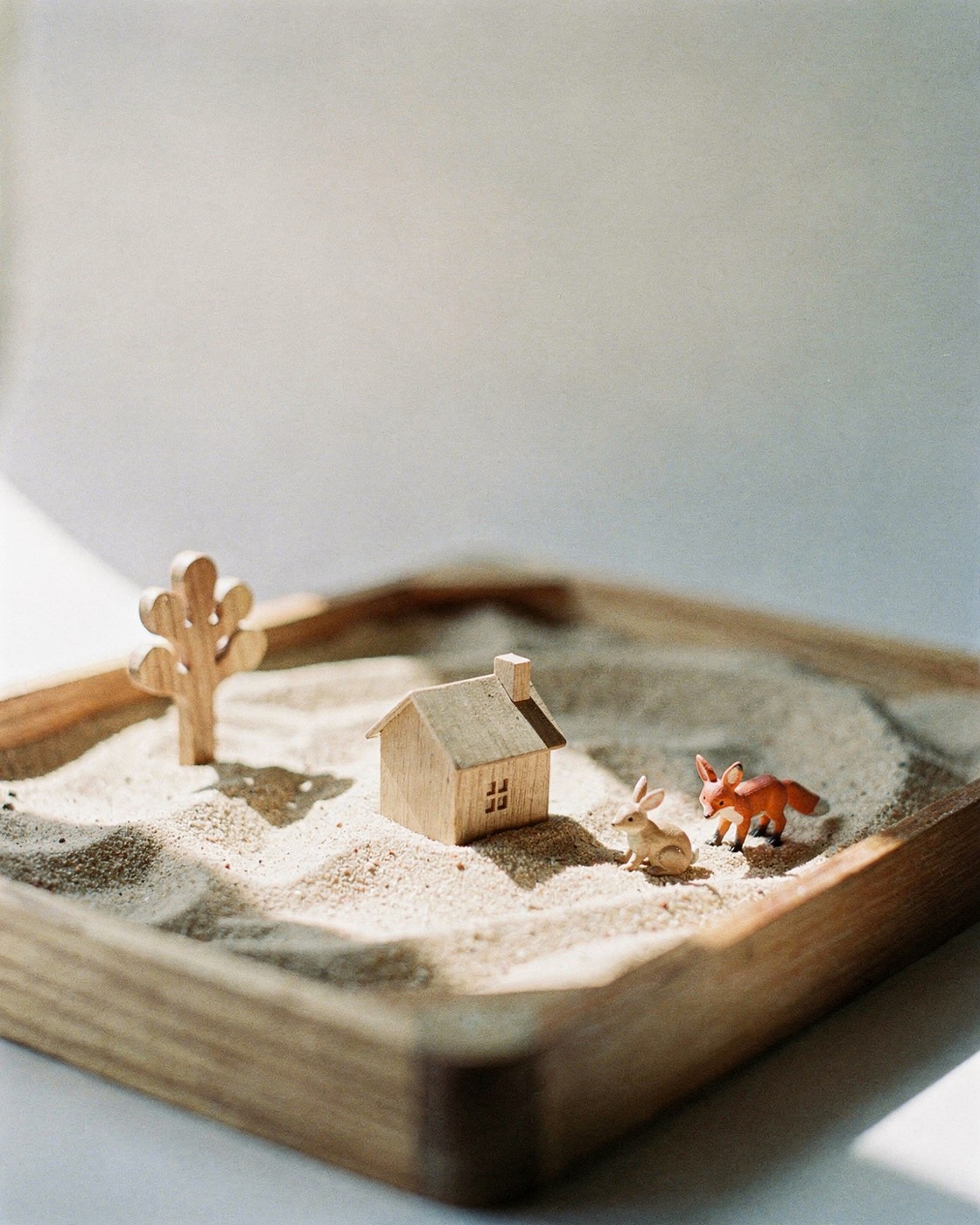
My playroom is arranged plainly and reliably: real-life toys, a sand tray with miniatures, paints and paper, costumes, materials for big feelings — and everything always in the same place. To a child that is no small thing: in a world where everything stays put, it is easier to dare the difficult.
06Fees & conditions
Simple and predictable
- Format
- Individual sessions, usually weekly, 45 minutes. A fixed day and time.
- Intro meeting
- 30 minutes, parents only, without the child — and without commitment.
- Fee
- To be confirmed — do ask at the intro meeting.
- Payment
- By bank transfer, invoiced.
- Cancellation
- At least 24 hours in advance — otherwise the session is charged.
- Where
- Haarlem; the exact address is shared after booking. From Amsterdam it is a 15–20 minute train ride.
07Questions
What parents ask
Are you a therapist?
No — and it matters to say this plainly. ‘Therapist’ is a protected title in the Netherlands, and I don’t claim it. I am a child play specialist, and I work with the method of child-centered play therapy.
Play sessions are not a medical service and don’t replace a doctor or a psychotherapist. If I see that a child needs a different kind of help, I will say so.
He’s just playing. How can that possibly help?
For a child, play isn’t a break from life — it’s how life gets processed. In play, a child repeats, reverses and replays what troubles them, the way an adult talks through a hard day. The difference is that someone is there who knows how to hear that ‘conversation’ and take part in it with care.
How many sessions will we need?
The honest answer: nobody knows in advance. Parents usually notice the first changes after a few weeks; lasting results most often take twelve to twenty sessions. We check in regularly at parent meetings, and the ending is always planned, never abrupt.
What should I tell my child before the first visit?
The truth, briefly: ‘There’s a room full of toys. Daria works there — she meets children and plays with them.' Don’t promise a party and don’t rehearse speeches: the room explains itself.
Will you tell me what happens in the sessions?
About the process — yes: that’s what the parent meetings are for. But the content of the play stays between me and the child — that confidentiality is what the whole work rests on. There is one exception: when the safety of the child or of others is at stake.
We speak Russian at home, but school is Dutch. Is this for us?
Especially for you. Sessions are in Russian: feelings need the language a child dreams in. The fact that their days run in Dutch is no obstacle at all.
What if my child doesn’t want to go?
That’s normal, and it happens often. Nobody is forced: the first session is simply a visit to look at the room. A room where you get to choose everything yourself tends to win children over quickly.
What do we do in an emergency?
Play sessions are not emergency care. In an emergency, call 112; if you are worried about your child, contact your huisarts (GP).
08Booking
Let’s start with a conversation
Half an hour of quiet talking — without the child, without commitment. You tell me what’s going on; I tell you how I work. Then you decide, in your own time.